Cape May

Cape May
(RE BERG-ANDERSSON)
Showing posts with label pear tree. Show all posts

Sunday, August 28, 2016

The Green, the Woods and the Woodpeckers

A New Leaf

A few weeks ago I wrote about my shock at opening the kitchen shade and looking out the window to see two big hunks of pear tree broken. I said at the time it was likely another bear visit, this time going after the one pear in the tree rather than a seed feeder. I still think it was a bear.

I worried about the pear tree, especially after I did some "pruning" that took off far more than I anticipated. I began to think about what kind of tree I'd get to replace the pear.

Today I went outside to refresh the water cooler and dish. I discovered that once again, Nature provides.

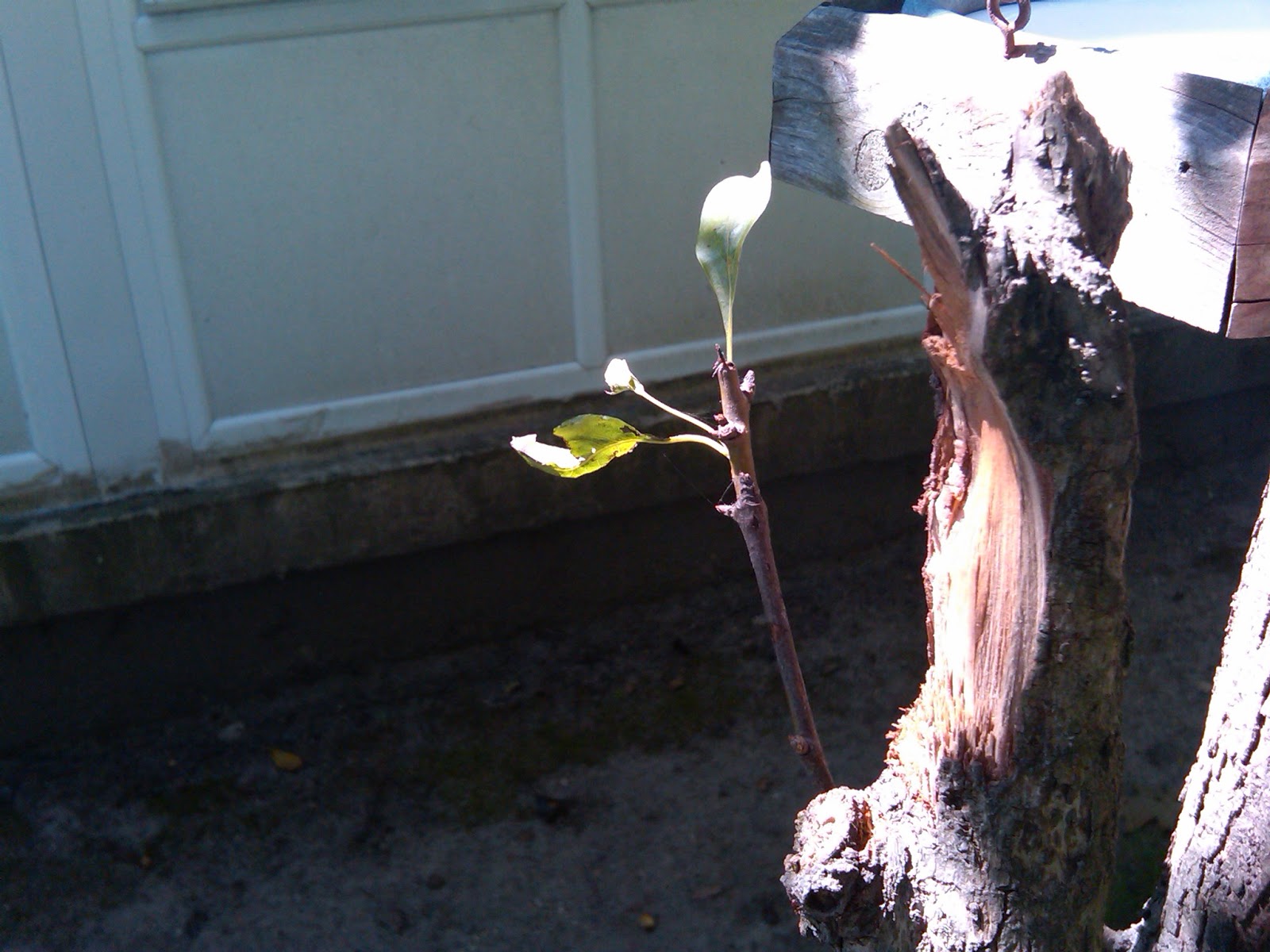
Below shows the growth coming from the snapped ends (once I sawed the broken part off).


New growth from broken pear branches (Margo D. Beller)


A Walk in the Woods

MH and I like to find new places to hike. If we find birds, so much the better. If there's no admission, better still.

So the other day we looked at a map of New York and found the Neversink River Unique Area. It's the word "unique" that interested me. All places are unique to me. However, the "uniqueness" comes from the deep gorge leading from the trail down to the river.

We did not hike that far in. We started uphill along the path from the parking lot among hemlock and pine in an easy grade (maybe not for MH's old knees) until we got to a level part of the path with a clearing. Oaks and maples with the pines. I heard the tittering of black-capped chickadees and titmice but when I saw movement and looked up, I saw something quite different - a male hooded warbler. Moments later, a Philadelphia vireo. A pileated woodpecker called loudly. Black and White warblers chased each other. All told we found five warblers (mourning warbler and ovenbird rounds out the list) in one small area.

This is why I go birding, the element of surprise, of one moment hearing nothing and then suddenly be surrounded by birds. This has happened to me a few times when seeing one bird led to seeing all sorts of "good" birds in a small area. It helps when it's migration, either spring or fall. I suspect the warblers and vireo were using the local knowledge of the local birds to find food.

The only problem was the shooting. Two guys were near the trailhead as we returned, one showing the other how to use a gun. Neither were young. One had the gun, the other a spotting scope, perhaps to make sure the other guy didn't kill anything. The guy with the gun was shooting low into the trees. The sound was loud and scary to me. I made sure they knew we were there as we hiked back to the car and they acknowledged. Eventually they left after other hikers showed up and as we were getting ready to drive off. Maybe we spooked them the way they spooked off the birds.

Hunting and trapping are part of the history of the Unique area, too. 

Woodpeckers With a Sweet Tooth

The law of unintended consequences bit me today.

We have had a lot of rain this summer but in the last week it has not rained much and gotten very hot again. I went outside to check the hummingbird feeder and found it filled with ants that drowned trying to get a drink. I dumped it and took out the cup that, filled with water, acts like a moat to keep them out.
Hummer feeder after downy flew off and before hummingbird arrived. (Margo D. Beller)
I came out today and found a male downy woodpecker on the feeder. I chased him off a couple of times. And then a female downy came to the feeder. I've had to chase her off a few times.

I realized that woodpeckers and hummingbirds have something in common - a long tongue.

So the downys - the smallest of our local woodpeckers - either sat on or perched on the feeder, dipped in their beaks, stuck out their tongues and drank, just like the hummers. It explains why the sugar water levels seemed to suddenly drop very low. I attributed it to the heat.
This would be a better picture if not for the screen but the dark object at the top center is a hummingbird. (Margo D. Beller)

Now I know the downys have a sweet tooth.

We are soon into bird-feeder time and the hummers should be heading south. This feeder will come inside for another year but the seed and suet will sustain the downys and other woodpeckers. I'll worry about a new breed of sugar-sucking woodpeckers next year.

Monday, August 8, 2016

...and a Black Bear in a Pear Tree

It happened again, another visit by ursus americanus, better known as the black bear.

This now marks the fourth time I have looked out the kitchen window to discover major damage that could've only been caused by a 200- to 500-pound bear.

Once again, the reason was food.
Pear tree branches down, Aug. 5, 2016 (Margo D. Beller)
Ever since the first attack, either in the late hours of March 26 or the early hours of March 27, 2015, I have been taking bird feeders inside at night, even in the middle of winter when bears should be in dens. I don't put feeders out in summer until August, when I put out a thistle sock for the goldfinches. I take that in at night, too.

That's not what the bear wanted.

What was damaged this time was not a feeder pole but the pear tree just beyond our enclosed porch, on which I hang several water dishes. It has only been in the last several years, when I hadn't cut back some of the longer branches myself or hired someone else to do it, that the tree has flowered in the spring. Flowers mean fruit is coming. Many years the squirrels grab the pears.

This year I found only three pears. One blew down when we had a horrific, non-hurricane thunderstorm (similar to the one that took our power last week). I forgot about the other two.

So when I found the two side trunks cracked and bent over, I realized the bear - for what else could it have been? - had tried to climb up to the remaining pears but had hit the ground when the branches gave way. For whatever reason, it didn't try again, thank goodness, and didn't leave any indentations or "calling cards" for us to find, as happened about 20 years ago when we had more apple trees and woke one morning to find a big branch down on one of them and said indentation and calling card below it. (The tree was one of those removed years ago, replaced with a garden containing ornamental grasses and plants not usually eaten by deer.)

I knocked down the two pears. One was already way past the point where it should've been picked. Here is the other one, which we'll eat at some point.
What the bear was after (Margo D. Beller)

One of the water dishes was still hanging in one of the broken hunks of tree. I estimate 1/3 of the tree had to be sawed off, which was unfortunate because I put in feeder poles based on where the tree is located. The poles are too far away for squirrels to jump to the feeders from the tree while allowing the birds a place to safely eat their seeds or enjoy a drink of water.

Making it worse, this was the same tree I had cut back from the top a few weeks ago, MH manfully holding the ladder against the house as I went up with my lopper to take down branches that were overhanging the enclosed porch and being used as a highway for chipmunks and squirrels.

So having cut off so much, why shouldn't I go out today, a hot and humid albeit cloudy day when I had nothing better to do, and cut off more hunks of this same tree to get the remaining upper branches? I didn't mean to take off hunks, I was merely bending down the branch to cut it better from the ground and the whole thing snapped.

The water dish had to be moved. (Margo D. Beller)


Apparently, pear trees are quite brittle. They can also grow 40 feet high. I did not plant this tree, just as I did not plant the apple trees that I had to cut down because I couldn't keep up with all the fruit on the ground that brought deer and their mess to my yard. Aside from the pear, only one apple tree remains, and thank goodness there was not much fruit this year or the bear might have caused more damage.

If the pear tree survives the summer and winter to bloom in the spring, I'll be amazed. If it goes, the replacement will be a non-fruit tree. As long as the birds get their shelter and water, they'll be fine.