Cape May

Cape May
(RE BERG-ANDERSSON)
Showing posts with label perennials. Show all posts

Sunday, August 4, 2024

My Evolving Garden

"Gardening is an instrument of grace." —May Sarton

I went outside one morning between rain storms to cut some flowers for the kitchen. At the time what was blooming were white Shasta daisies, yellow daisy-like flowers that have spread beyond the two plants my sister-in-law gave me, purple salvia, some zinnias and purple coneflowers. The early spring flowers were long gone and the fall flowers - rose of Sharon, sedum - were still in bud. 

Garden flowers - zinnias, yellow daisies, goldenrod, coleus, coneflower.
(Margo D. Beller)
As I was preparing the flowers for the vase I thought about how my garden has changed over many years .

When we bought our house decades ago, the area in front of the bay window was flanked by two large rhododendrons and three azalea shrubs between them. At the side of the house were drifts of daffodils. In the back was a plot of the ground cover pachysandra. There was no patio, no paving-stone walkway. In the front, the dirt path had large flat stones for walking to the front door. I don't remember if anything was growing along that walkway.

Then we had to have major work done on the foundation. All those plants I mentioned above - gone. I regretted losing those daffodils and the rhododendrons.

The rhododendron I planted. (Margo D. Beller)

So when the work was done and it was time to plant a new garden I had to take into consideration zoning rules (a "park-like" lawn on the 35-foot setback that came nearly to the house), whether the plants needed sun or shade and, especially important for me, what kind of pretty flowers would they produce.

I planted a rhododendron where one of the previous owner's plants had been. I flanked the area with two rose of Sharons. In between were a row of yellow and green euonymous shrubs and purple asters at the front. I was not thinking in terms of perennials vs. annuals or how fall-blooming plants like asters would look in the spring. Like the plants, my thinking would eventually change.

Along the now-bricked front walkway I put in azaleas. In back, small yew shrubs. Where the daffodils had been, some andromeda bushes.

It didn't take long before I started learning about the animals that roamed the property, especially rabbits and deer.

After too many mornings when I discovered a rabbit nibbling on the asters, I bought a small fence to keep them away. That sorta worked (and thanks to the increase in the fox population I haven't seen a rabbit in the yard in years). But then I'd see damage to the asters and the euonymous shrubs and figured out something bigger was stepping over the low fence and helping itself. 

I can't remember how long it took to figure out I had a deer problem. I started reading about deer and what they are likely to eat, and quickly realized I had created a veritable White Castle for Odocoileus virginianus.

Columbine (with seedheads) that sprung up between euonymous shrubs.
(Margo D. Beller)

There are ways to deter deer. You can continually spray foul-tasting stuff on your plants, you can get a dog to patrol the property and pee in the garden so the deer smell it and stay away from a potential predator, you can put up barriers such as a fence or you can plant things that a deer is generally presumed not to like (but I've found will try anyway).

I eschewed the spray and I don't have a dog, so I went with fencing and plants - such as ornamental grasses and onions - in areas where I didn't put up a fence. 

After the azaleas stopped blooming I realized having just these plants looked boring, So I planted low juniper bushes between each azalea to make it more interesting. I discovered the joy of daffodils when a now-former neighbor insisted I fill a bucket with them after her son-in-law rescued hundreds from a garden crew that had dug them up from an office park. I bought more daffodils and got even more from a friend who said she didn't want them in her garden. Eventually daffodils were planted with ferns between the andromedas as well as in the spaces when the junipers eventually died.

The asters eventually died, too. I planted hyacinths, crocus and glory-of-the-snow and lilies. A friend gave me some goldenrod and snowdrops. A charity mailed me a packet of Shasta daisy seeds, most of which have sprouted. These are all behind deer fencing.

Fencing protecting yews. Behind them are the hostas.
(Margo D. Beller)

From an annual plant fair I bought butterfly bush, butterfly weed and hellebore. After several attempts to grow black-eyed susans failed I succeeded with purple coneflowers. I found columbine that had produced seedheads in a vacant lot about to be built over. These seeds have produced daughter plants everywhere I've spread them and beyond. I did not, to my regret, rescue a peony so I bought one that has flowered beautifully each spring. 

I bought a hydrangea bush to remind me of my parents' garden, but between the deer trying to eat it and the chipmunks tunneling underneath it didn't last. 

I planted joe-pye weed that grew 10-feet tall and threatened to overwhelm the bay window plot so I had to move them. They did ok after the move but they are now gone. The ornamental grasses I planted did much better than the Scotch brooms and lavenders I tried in the backyard.

Joe-pye in the wild. My experiment with them did
not turn out as well. (Margo D. Beller)

When a friend was breaking up her garden she begged me to take some of her plants, so I took irises, lily of the valley, astilbe, perennial geranium, fringed bleeding heart, yarrow, bishop's weed, monarda, vinca and several hostas. These plants have since been moved several times or have died, either because they reached their mortal limits or because they became so invasive I had to pull them out. Some of those that died I replaced with the same type of plant. 

In the case of the hostas I tried to get rid of as many as possible after the time deer ripped through the netting and nearly destroyed the potted plants, which I'd foolishly put in front. I now have two hostas hidden behind other plants. The others I gave away. 

And, of course, there are always weeds.

For my fencing I started with heavy metal poles I could never get fully in the ground. Then I discovered thin metal poles coated in green plastic that had no hooks. These don't last as long but I can hammer them into the ground. I developed a way of attaching the netting with green plastic garden ties, looping the top of the netting around the top of the poles. I also moved the low fence, putting it around my compost pile.

May Sarton wrote about her garden in her journals. She had vast drifts of flowers at her place in York, Maine. I don't remember her complaining about deer or about overdevelopment or climate change making the Earth too hot and changing when those flowers bloomed and when bees, birds and other pollenators would be stopping by to feed. 

Perennial geranium I bought and potted, and a hosta I kept that is not
yet hidden by the yew. (Margo D. Beller) 

But all that is happening now. With so-called development wiping out natural areas for residential and commercial lots the increasing deer populations gather and eat in small garden plots and suburban yards because there are no woods anymore (or predators that have been wiped out, or fear of being shot where people are now living).  

Meanwhile, the planet is getting hotter and plants are blooming before insects and birds can pollenate them. In years of massive insect populations the leaves of many plants are turned into lace. In other years, like this one, there has been so much rain my dogwood bloomed and the red spider mites were kept away from the flowers. Our recent heatwaves have been punctuated with massive downpours turning the street into a river and our driveway into a tributary.

The perennials have been growing in my garden long enough to be used to the conditions and can take care of themselves, which is fine for me. Annuals don't do nearly as well so next year's garden won't have them. If climate change makes my garden evolve into a desert or a floodplain, so be it. The garden (and I) will deal with it.

Sunday, April 30, 2023

Life and Dying in the Backyard

Every spring I am surprised by my plants coming back after the winter. This year is no exception despite temperatures that reached the 80s in February and the 30s in April, with very little snow but lots of rain. Although some plants did not get as tall or as showy as usual, they did flower. The same is true of the trees and the shrubs. Both the apple and the pear trees have flowered, despite being severely cut back early this year. Where there are flowers there will be fruit, albeit fruit too high for me to easily pick.

Dogwood flowers in 2016 (Margo D. Beller)

This post will focus on one particular tree.

I have lived in my house for over 25 years. In my suburban neighborhood "woods" means trees on the property border. Any trees planted in the front or back yards have been put in by the homeowner. Over the years I've had to cut down yard trees for various reasons. I have, however, planted two trees - the blue spruce we nicknamed Spruce Bringsgreen and a flowering dogwood.

I planted the dogwood because in the fall it is supposed to produce red berries for the birds. Since that tree was planted in 2007 I've learned berries are not guaranteed. Like the other flowering plants, it depends on the weather. Some years there would be lovely pink flowers on the dogwood. But that did not necessarily mean berries would follow. Some years yes, some years no. The fresh green leaves would go red in the fall. 

Dogwood berries, 2019. Note the discoloration
in the autumn leaves. (Margo D. Beller)

Since planting that tree I took it as a given that once established it would always be there. But like any other living thing, trees die. Sometimes they are killed by man, who cuts them down or pollutes the air. Sometimes they are killed by insects, as was the ash tree I had to cut down because of the emerald ash borer. Sometimes, however, they are killed by bacteria or fungus.

I don't remember when during the winter I first began to notice one branch was missing some of its bark but I did eventually notice, especially when more bare patches began to appear. I became alarmed when the apple and pear trees, the viburnum, the forsythia and the lilacs started leafing out and the dogwood remained bare. I thought the tree was dead.

My first indication something was wrong.
(Margo D. Beller)

I was going to write about it here. I even had a name for my post - Dead as a Dogwood.

But reports of the dogwood's demise were premature - after a recent heavy rain it started to leaf out.

Not everywhere, however. The part of the tree where the bark has come off remains bare, as are a few of the lower branches. 

I did some research into dogwood diseases, and to my horror discovered there are quite a few. The one that appears the closest to what is happening with this tree has the awful name of "crown canker."

Hoping for the best, I wrapped the lower part of the tree to prevent the bark that was just starting to flake from getting worse. I used my lopper on some of the lower branches and will have to use a saw or chainsaw on other parts. Because the tree went straight to leafing there will be no flowers. The leaves are small and I doubt there will be fruit. I don't even know if the tree will be alive next year.

(Margo D. Beller)

As I looked at some of the pictures I've taken of this tree over the years I realize the signs were there: discoloring in the leaves, the irregular production of fruit. It was not until the bark started falling off that I realized this tree is sick. Should I have used the sprinkler last year instead of letting the grass go brown and deprive the tree roots of water during the summer drought? Should I have added more mulch to what I had already put down at the base of the tree? 

Dogwood leaves, 2023 (Margo D. Beller)

I don't know. This year I'll use the sprinkler more and I'll use my saw on the dead branches. The tree may be disfigured but I hope it will recover. Or it may die. Living things die, even trees.

In the meantime, as I have for the past two years, I have put up the house wren nest box on one of the living dogwood branches. I heard a wren singing the other morning as I put out the feeders. The bird investigated the box, then flew to another yard. Will it be back? That, too, is unknown.

Saturday, April 1, 2017

Signs of Leaf

When the last of the snow from the "Blizzard of 2017" finally melted or was washed away by this week's heavy rain, MH rushed out to walk the property, gimpy knees and all, to put fertilizer on the lawn.

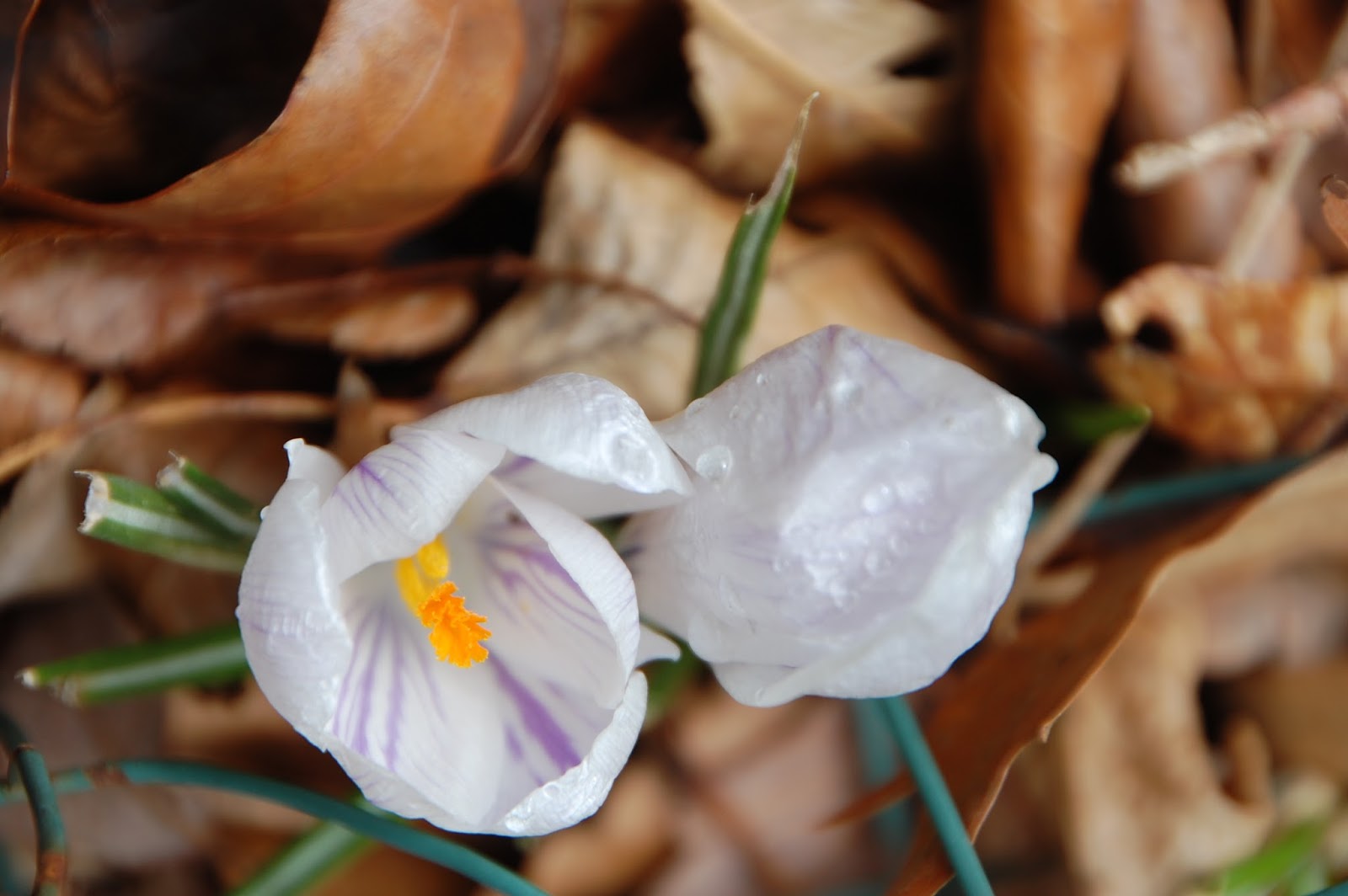
Fading white crocus - April 1, 2017 (Margo D. Beller)
He was not alone. Several men I saw - and it is usually men, either homeowners or hired - were doing the same or using leaf blowers to push off last year's detritus. It must be some sort of innate call of the wild.

I, meanwhile, took a walk around the garden and found - once again, despite my neglect - signs of life, although in most cases these were more signs of leaf.

I am currently rereading the letters of garden writers Katharine White (for the New Yorker; she was the wife of E.B. White) and Elizabeth Lawrence (for the Charlotte (NC) Observer). Their intense discussions of flower borders, little bulbs and the wreckage in the gardens caused by weather or failing bodies that just can't keep up seems even more relevant to me now than the first time I read this, several years ago.

Glory of the snow - April 1, 2017 (Margo D. Beller)
So, inspired by them, I, too, walked the property, eager to see what was doing well and what was not.

We had a warm February and that had started some plants growing way too early. Then the cold and snow came with March, and many of the plants went into suspended animation. The yellow crocuses hung around quite a while but the snowdrop came and went. Small narcissus started blooming but several of the larger daffodils caught mid-bloom when the cold came looked bedraggled. Before the blizzard I cut them and put them in water inside, to prolong their life. I did the same with a couple of branches of forsythia, another early bloomer.

Now, more daffodils are growing; more of the white, pink and purple crocus have appeared; and a little blue glory of the snow reminded me of its existence once the snow melted. But some of the daffodils in flower are much smaller than they should be. The leaves of the butterfly bush I rushed to cut back in mid-February as they proliferated are now dried up and I wonder if they will grow again. The forsythia looks very poor and the quince buds are still waiting for the weather signal to open. Same with the dogwood buds.

Budding dogwood - April 1, 2017 (Margo D. Beller)
However, all the rain has started the ornamental onions, the bleeding heart and the lilacs growing, the irises are getting taller, the tulips that had stopped growing have restarted, and all of these should open on time.

The birds have also been active. Goldfinches visit the feeder, the males just starting to show their breeding yellow feathers and black "cap" on the head. Cardinals and titmice are singing up a storm. Robins are everywhere. I walked along the Whippany River the other day with MH and we counted eight phoebes, a very early migrant. More birds will be coming north once things warm up, the trees leaf out and the bugs start flying. 

I would love to put in more early spring bloomers for the color but, except for the daffodils, they can be eaten by hungry deer, which have been browsing on my lawn for whatever little bits of grass they can get since the smaller shrubs are behind netting, along with the budding azaleas. It takes a lot of effort to kneel down and put in plants, particularly when dealing with deer netting.

Daffodils with newly growing bleeding heart at left (Margo D. Beller)
Neither White nor Lawrence mention deer, although White mentions red squirrels and other critters getting into some of her flower beds over the Maine winter. Lawrence despairs of bringing order to unruly beds. I'd love to have that problem of too many flowers. But while I inherited my grandfather's affinity for plants, I don't seem to have his stamina, at least at present.

What I do have is a huge desire to buy plants and put them in pots, both inside (where I have many flowering plants crowding my one sunny window sill) and out (behind netting). In my garage are boxes of canna roots and one dahlia I did just about everything wrong on and yet it flowered. I have seeds I have collected from vegetables and flowers. One of my friends has pepper seedlings growing on her window sill. She put hers in during the warm spell. Mine went into soil when it turned cold and have yet to come up in their pot.

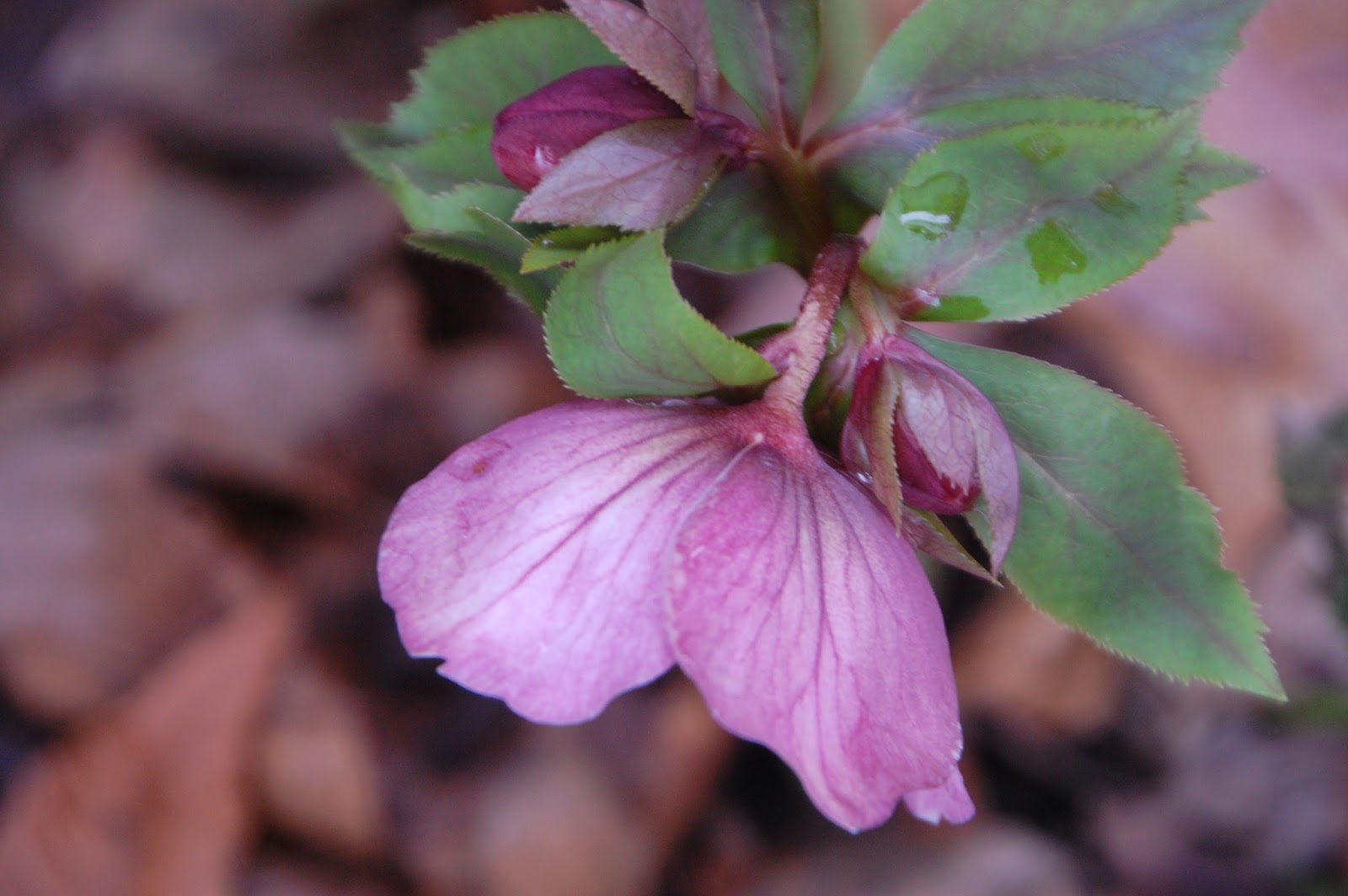
I discovered this lenten rose (helleborre) flower on the morning of April 1, the first time the plant has flowered in years. (Margo D. Beller)
Luckily, I have more than enough seeds to try again and wait for those signs of life, or leaf, to remind me of rebirth and renewal.