Cape May

Cape May
(RE BERG-ANDERSSON)

Sunday, August 7, 2011

The good and bad at Greystone

There are a lot of good things about living across the street from a large piece of undeveloped land.

There is quiet during early morning walks. There are the many birds that enliven the area and come to my feeders.

And then there are the deer, which isn't so good.

I recently read a blog post elsewhere complaining about deer and the resulting comments ran to the "stop whining, they were here first" camp. That is true, they were here before I moved here, before my 1960s-era house was even built.

Tough. I live here now and discovering what one deer can do in damage has changed the way I garden. Had I known when I was landscaping in 1993 what I know now, everything would be different.

No way would I have taken my friend's hostas when she had to break up her garden. Nor would I have planted hydrangea - since deceased - to remind me of those in my mother's backyard. Nor would I have put in six yellow and green euonymous bushes, although they do bounce back whenever a deer has gotten past the netting.

Ah, yes, the netting. There is no such thing as just going outside and picking a flower or two when you have to get behind deer netting. The planning is reminiscent of battle. I've restrung my netting many times over the years as I refine the process of allowing access to me while blocking it to the deer.

But most of the flowers I now grow would not be here, starting with the azaleas I thought were so pretty in the garden shop.

The same garden shop that NOW so proudly trumpets "We have deer-resistant plants!"

There are no such things, by the way. A hungry deer will try anything once. Many of my "deer-resistant" plants have been nibbled including the canna, the monarda and the maidenhair grasses I put in a plot where there was once an apple tree, another casualty.

The previous homeowner had a lot of apple trees, which are very pretty for about a week when they blossom but become a royal pain when the apples come out, the squirrels drop them and the deer poop all over the yard while visiting to pick up the leavings.

One tree succumbed to illness, another to having young bucks rub against it to lose the velvet off their antlers. Two others I took down because the apples weren't very tasty to me but they did draw the deer. I replaced them with a dogwood (currently behind netting so it isn't rubbed into oblivion) and a blue spruce (that has hidden some juncos in winter).

For two weeks a year I must go out to pick apples for my cooking from the one remaining tree or dispose of half-eaten ones to minimize the attraction for deer. Judging by what I find in the grass, I am only partly successful.

More of my neighbors are either putting netting around their plants or putting out "deer-resistant" plants that are mainly spiny shrubs that hurt to eat. If any have flowers they are in hanging baskets.

We don't keep a dog so the other obvious answer would be to surround the yard with a tall fence, at least 8 feet high. (I have seen deer casually jump over a 6-foot fence. They have powerful hind legs.) There are two problems: in my part of town the requirement is for a "park-like setting" and so no fencing in the front yard. In the back, my husband likes being able to look beyond the yards to the streets and see who is driving or walking around and says he would feel shut in.

I don't see the difficulty in this. But since MH works in our home and I do not, I must net the two gardens in front and one in the back that is dominated by yews, another deer favorite, and what is left of the hostas.

I have learned to think like a deer. I know to stay to the side and behind the group so they keep going forward - a deer that goes back the way it came will likely be back as soon as you go into the house. I know that if a horned buck looks you in the eye and puts its head down, back away slowly because otherwise it will charge you (particularly in rutting season). I have learned that if you try to chase off a doe and she just stands there, there is usually at least one spotted fawn somewhere nearby - the sooner mother and child are reunited, the sooner they both leave.

I know, they are only animals. It is not their fault that large tracts of meadowland were cut into suburban yards with just enough space to feed them and not enough space to allow humans to hunt them.

In rural New Hampshire, my sister-in-law doesn't have to worry about deer eating her flowers. The properties are not close together and the woods are full of wolves, coyotes and, in season, hunters.

In short, they are afraid of people. Not like the deer in New Jersey. New Jersey deer have attitude to spare.

Saturday, July 30, 2011

The law of unintended consequences

I have a friend who lives in Somerset County up a steep hill. Her property slopes and her deck is above the yard. Every summer she gets hummingbirds at her feeder.

I don't know if it's the altitude or the red monarda or zinnias she keeps in a pot near the feeder but when I visit in summer a rubythroat will almost always stop by while we're on the deck. They are very fast, as you can see from my attempt to photograph one.

I envy her because I rarely get hummers. I finally saw my first of the season this very morning, although it could've been coming while I was at work. My town is built on a plateau 400 feet above sea level but my yard is flat.

The feeder is hanging on a pole behind deer netting because I have put plants around it that bloom pink or red flowers to draw the hummers and I don't want deer to destroy the plants. The netting doesn't impede a hummer getting to the sugar water.

Also this very morning a male goldfinch came to feed. This may be the one that has been coming for a while with its mate, or one I have heard doing his swooping mating flight. The same friend with the hummers is envious of ME because I get many more goldfinches in winter, such as those below, than she does. It might be the very flatness of my property, or being located close to the Greystone woods or not having neighbors close by that have cats roaming the yards, as she does.

We always want what we can't have. I always envied those people who live within close walking distance of Central Park in Manhattan when MH and I lived in Queens. When we moved to New Jersey, I envied those who live in or near Cape May, one of the state's premier birding sites. How nice to get up at dawn, walk 10 minutes and see all sorts of birds!

Then my new eye doctor told me he grew up down there and was very happy he was now in Morris County because he had always wanted to bird Great Swamp, 20 minutes by car from my house when there is no traffic at dawn.

Yes, it would be nice to live near one of the Somerset County grasslands so I could go over and hear grasshopper sparrows or dickcissels, both life birds for me, singing at dawn. But then they wouldn't be life birds. They'd be common.

So I enjoy the singing cardinals and the carolina wren and watch the thistle feeder that I've discovered not only draws a pair of goldfinch but chickadees and titmice.

This was not planned but I should've realized chickadees and titmice have no qualms about hanging upside down if it gets them a meal, and are far less skittish about being exposed to predators in an upside-down position than the goldfinch I intended to help during breeding season.

I do not mind them coming because I like chickadees and titmice. Seeing the occasional house sparrow that has learned to hang upside down for a meal pleases me much less.

This is where the law of unintended consequences comes into play. Most people don't realize that changing one thing in the yard can have a profound behavioral effect.

Take my friend with the hummer feeder. She had her yard guys "clean things up" early in the growing season. Not only did they cut back shrubs and kill assorted weeds, they cut down a blackberry bush that had grown to tree size. We used to sit on the deck and watch the birds and the squirrels eat the berries.

The birds can still come to the seed feeders she keeps going all year. But when it got hot and the squirrels couldn't get berries, one of them discovered a sweet substitute - the hummer feeder.

Unfortunately, my kindhearted friend puts out corn for the squirrels in winter and they have gotten used to coming to her deck and finding food. So one must've come up a few weeks ago looking for a snack and was drawn to the red saucer-type feeder. It then pulled off the lid and drank the sugar water!

The experts say this just does not happen. But in this case the experts are wrong.

My friend bought a more vertical type of feeder and came home to discover the squirrels had pulled off the yellow decorative flowers and drank from the open ports. She is now using her saucer feeder again, taped shut. To refill she must use a screwdriver to rip the tape open.

On this I don't envy her at all.

Saturday, July 16, 2011

Reconnecting

I did something radical this morning. I walked. In the suburbs. Yes.

Until the end of March I walked almost every day, most of the time to the train station in town. This was the reason we moved to this little town, the ease of walking to public transportation to my job, first in Jersey City and then in midtown Manhattan.

When that job ended in February I started taking daily walks very early in the morning through what has now become a county park, Central Park of Morris County, but used to be the nether regions of the state Greystone Park psychiatric hospital. I heard and saw a lot of birds in those early March trips.

Then I got a new job and it required me to drive to a city on the Hudson River, 35 or so miles away as Route 80 flies.

Things become a blur from the car because you have to concentrate on the road, on your driving, on other cars. The brain isn't stimulated, at least not in what I think is the right way, and the legs aren't being exercised. You get where you are going faster, but you don't enjoy the trip as much.

So this morning I decided that rather than grab the car to do all my local errands I would walk.

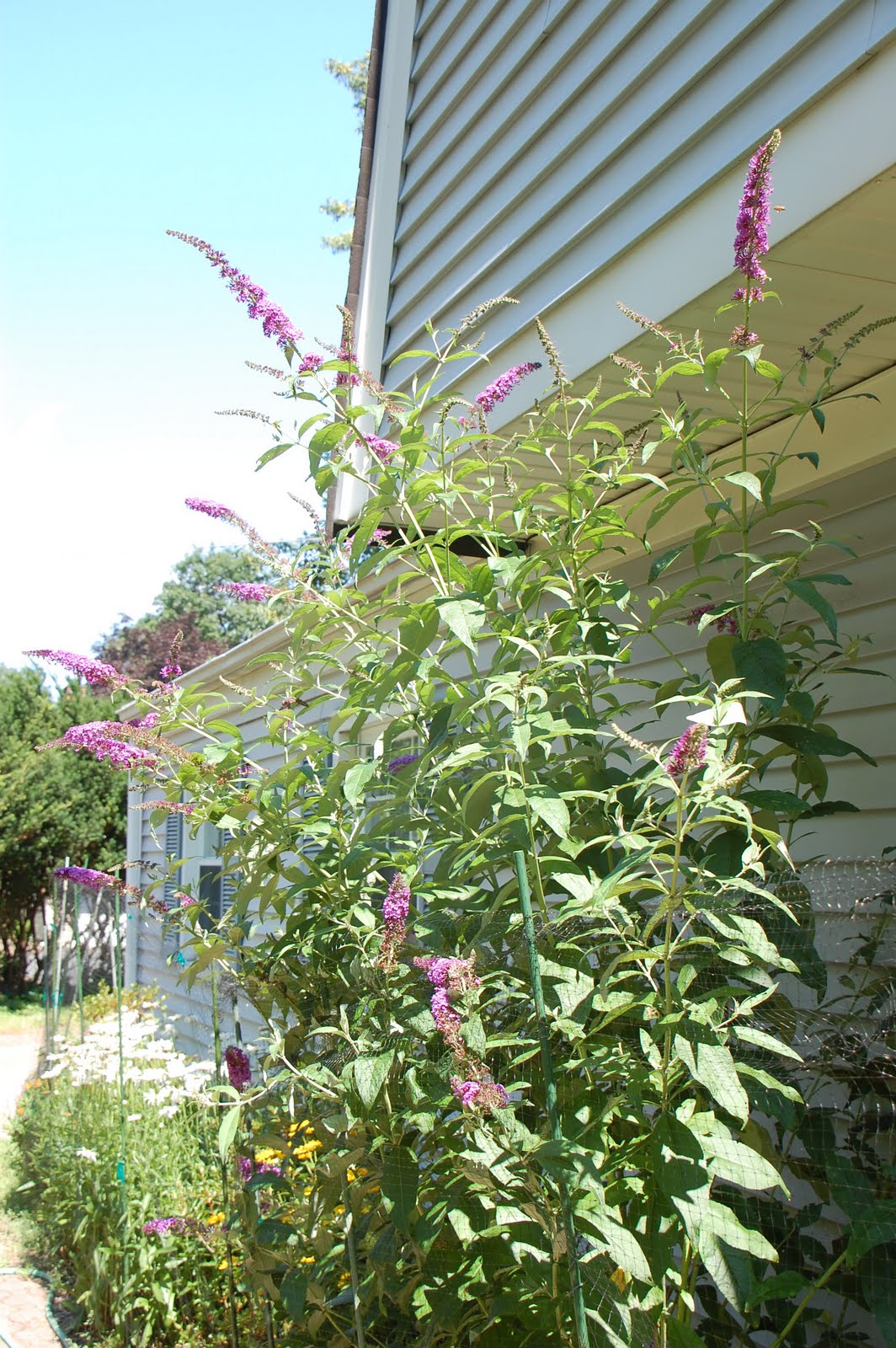
It was a real eye-opener, starting with my own yard. How did that butterfuly bush get so tall? Seems like just yesterday I was cutting it back the way you're supposed to in spring to generate new growth.

When did that house on the next block go up for sale? It always has a nice garden, put in with an eye to saving time and water while using plants that deter deer without netting. Will the new owner keep the garden, or will it be removed in favor of just grass or, worse, paved over?

When did that other house rip out its old, tall hedges and put in a sprinkler system that waters the public curb about as much as it waters the small, nondescript replacement shrubs? I used to hear a lot of sparrows chattering to each other from their nests in those hedges. When did that house a few streets away double in size? It's on a lot that hasn't gotten any bigger. I guess people prefer the climate-controlled, soundproofed, technology-driven great indoors and have less yard they'd only have to pay someone to take care of anyway.

I walked along the Greystone road, past the dog park that had only a couple of people letting their pets run at that hour, and found all the deer I chase out of my yard and then some - many had fawns hiding in the long meadow grass. I heard bluebirds, carolina wrens, cardinals. Once I leave my house I rarely hear birds on my drive through town and never on Route 80, where the posted speed is 65 but that is more a floor than a ceiling.

I said good morning to other walkers and waved at neighbors getting their newspapers from the curb. I felt the welcome ache of muscles being used in my legs. I felt the breeze in my hair and the sun, not amplified by the greenhouse effect of my metal car, on my neck.

I enjoyed myself greatly, and I even got my chores done.

Alot of people spend a ton of money to go to exotic locales where they can walk through a rain forest or along a beach or tour museums and historic sites.

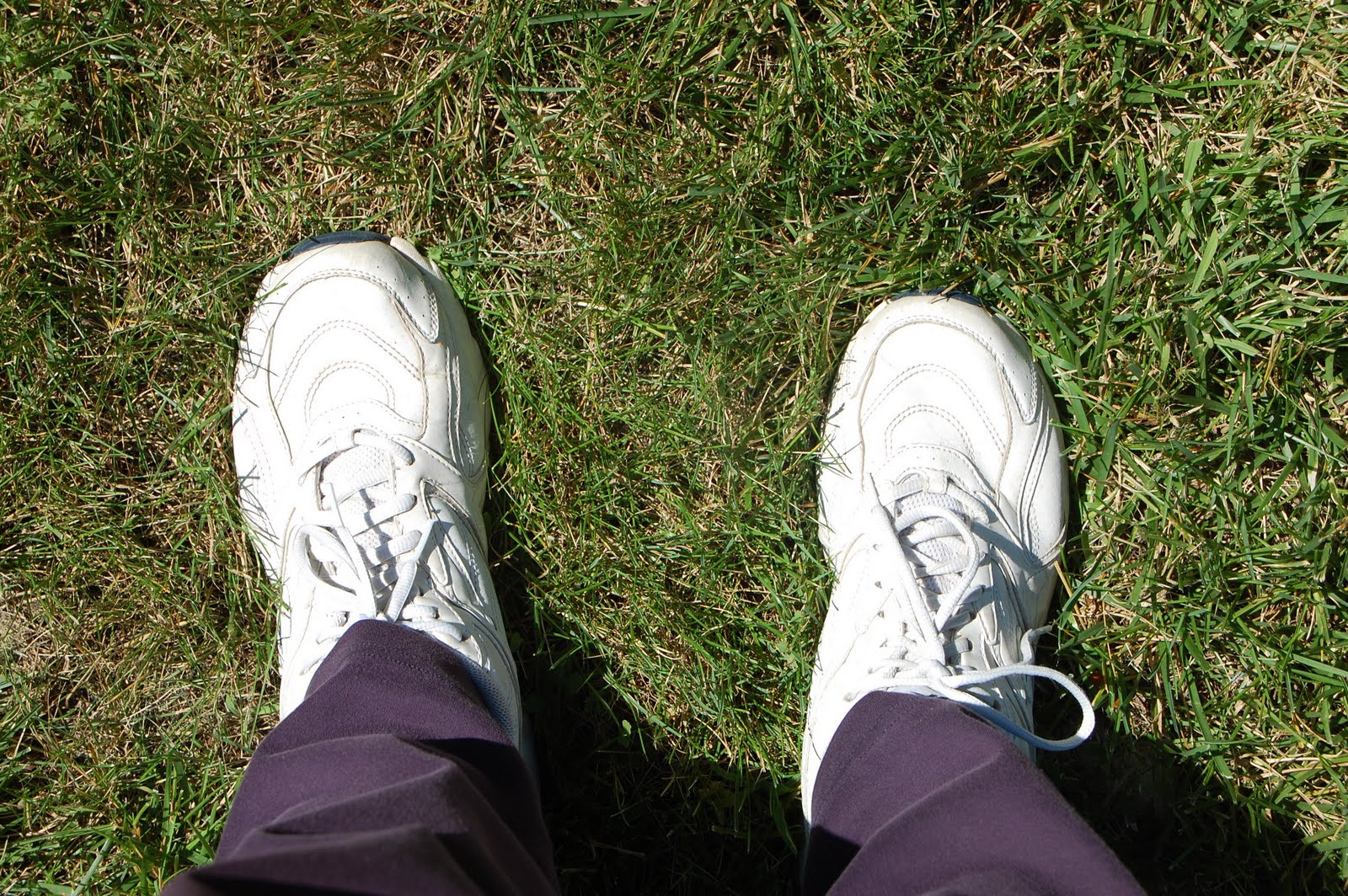
Today I was reminded that sometimes you don't have to go far, or do more than put on a pair of sneakers, to get away from it all while reconnecting with the world around you.

Saturday, July 9, 2011

This brood has flown

It was bound to happen sometime.

Things were getting loud and rambunctious at the wren box. The parents were shuttling back and forth so fast and so often I doubt they ate anything themselves. The young got so big the parents had stopped going into the box to feed them unless it was to feed one in the back, crowded out by more dominant siblings.

And the parents would not stop scolding me. All I had to do was walk out the back door and one or the other would be chittering. Much of that was to tell the young to be quiet so they wouldn't give away their position. That's instinct, although considering they were in a box I had put up in an apple tree, rather silly.

But I put up with it.

The apples in the tree where the feeder is hung were getting riper with the hot weather, and the squirrels were increasing their visits and dropping more chewed apples. This required me to go out more often to pick up the remains or pick apples I could reach before the deer came along...although based on what is under the tree my actions are also pretty silly.

Then MH and I went away for the July 4 weekend.

We came back on the 4th, a Monday this year. There were no apples on the ground when we came home but there were the next morning. The wren scolded me as usual. But on Wednesday there was silence as I picked up the apples. I reached up and shifted the box and it was as light in weight as the day I put it up.

But while out of the box the wrens have not left my yard. The male house wren will sing in the morning, particularly if the carolina wren on the next block is singing - which he does quite loudly for a small bird, to my delight.

Lately I have heard the brood but not seen them as they move among the dense shrubery. Momma wren chitters when I first come out, as if to say to her family "Be careful." But she does not come to the tree as I work. (This was a good thing because I wanted to come out and pick as many apples as I could reach or knock down with a stick, which I wouldn't do if the box was in use.)

And who knows, the male may start a second brood in the house. Wrens are not monogamous - when the young can take care of themselves, the party's over.

Whether there's one brood or two, at some point the young will start feeding themselves and will, at the right time, feel the need to head south as the air cools. With any luck one of them will remember my yard and come back.

When he returns and starts singing he will find the box - clean and empty - waiting for that year's brood.

Friday, July 1, 2011

Timing is everything

The American goldfinch is the state bird of New Jersey, so it is a particular pleasure when I see or hear them in my Morris Plains backyard.

In winter both male and female are a dull brown with large black and white wingbars. When they’ve come to my feeders they are usually in a large group.

But as spring approaches, things start to change. The female’s feathers become yellow-green to better blend into the foliage when the trees leaf out and she’s sitting on a nest.

The male makes a more dramatic change – he becomes bright yellow and takes on a black forecap. When it is time to breed, he soars, dips and rises again, a dizzying loop-de-loop, calling as he flies.

The goldfinch has a late breeding season that is directly linked to thistle seeds. What you might see as a bunch of purple weeds in an overgrown field is breakfast, lunch and supper for a goldfinch – and a reason to breed. Without seeds there is no next generation.

Consider Jersey City, the second or third largest city in New Jersey. When I started working there in 1999, there were large, weedy fields in the areas near the Hudson River that had once held factories. With the fields were large hungry flocks of goldfinches eating the seeds.

By the time I stopped working in Jersey City over 10 years later, many of those weedy fields were gone, paved over for large hotel and apartment complexes. The population of birds passing through dropped dramatically.

Some would call it progress or a boost to tax ratables. Considering none of these buildings feature any useful seeding plants in their landscaping, I would say it is a terrible way to treat your state’s bird.

This is why when I start to see the males doing the loop-de-loop, I put out a special feeder for goldfinches. To get a thistle seed the bird has to hang upside-down from the perch. Most birds, such as the larger, aggressive house finch, don’t like to do it. So it gives goldfinches a fighting chance.

Goldfinches are considered a common species by the Cornell College of Ornithology, and its breeding and migration range is within the United States.

(Here’s a fun fact about goldfinches I learned from the Cornell website, www.allaboutbirds.org: if a cowbird lays an egg in a goldfinch nest the chick will die after three days because it can’t survive on a seed-only diet. See my June 12 post "Love is blind" for more of my feelings about cowbirds.)

The suburbs being what they are, I can’t have a vast expanse of weedy field. Nor can I plant drifts of coneflowers, asters and butterfly bush to provide seeds. My neighbors would have me kicked out of town for the former, and the deer eat most of the latter.

So I pick my spots. I leave weeds in corner areas to go to seed. I grow coneflower and butterfly bush behind deer netting. And, of course, there's the feeder.

If I and the rest of the New Jersey population are lucky, the skittish goldfinches will eat the seeds provided, continue their loop-de-loops and raise another brood.

That's my reward for being a good neighbor.

Sunday, June 26, 2011

It's a brood!

It has taken several weeks but there is now a noisy brood of baby house wrens in this box.

I first realized the skittish adults had settled down earlier this week when I saw a squirrel jumping out of the apple tree where the box hangs, apple in mouth, chased by a scolding wren. The wren even pecked at the squirrel as it ran up an oak tree, no doubt to its own nest.

(This will happen alot, unfortunately. Last year I was lucky to get enough apples to make three pints of apple sauce.)

Yesterday, early, I was outside and heard soft cheeps from the box. But when an adult showed up the cheeping became more insistent.

Since then the parents have been shuttling back and forth to a loud chorus of "Feed Me!!" in wren talk. Papa wren has been too busy to do much territorial singing. Mama wren has been quick to fly to a branch near me and scold if I get too close, or even if I come out the back door to dump some compost in my corner pile.

The other day I read a post on the NJ bird list from a guy in Basking Ridge whose first reaction upon seeing a bear in his yard was to get a camera. The bear had bent over the post holding his wren house, poured out the babies and ate them.

The guy's reaction? Too bad about the wrens but here are my amazing pictures.

Basking Ridge is not far from Morris Plains as the crow flies, although it is a fair piece of walking for a 200-pound bear. Had it been me and MH had been awake I'd have yelled at him to call the cops while I grabbed two pots to make noise running at the bear to scare it off. I know, I'm stupid. (I've done something similar to chase off a buck although when it put its head down to charge me I quickly backed off.)

My feeling is, if you go to the trouble to set up a habitat to protect birds and help continue the species, you protect them as much as possible. In my yard I chase off stray cats and have been known to wave a broom at cooper's hawks to keep them from the feeders. MH says even hawks have to eat and I agree but I say, let them eat elsewhere (or at least pick off the chipmunks).

It will be another week or so before the wrenlets start venturing beyond the box. Last year one fell from the box and was immediately snatched up by a jay before I could get out the porch door. Two others survived and I hope the two or three in the box this year do, too.

When autumn comes and I take down the box and clear it I will marvel that in this tiny space an adult wren was able to build a nest, lay her eggs and then feed the growing young. It's the same feeling MH gets when he thinks about growing up in a house with two parents and two brothers and only one bathroom - how did we do it?

You did it because you had to. It's why the wrens use the box and why I put the box up in the first place, my small bit to make the world a better place.

Sunday, June 12, 2011

Love is Blind

I do not like cowbirds.

They are ugly birds. The male is black with a brown head that looks all black in dim light. The female looks like an oversized, gray house sparrow.

I do not like the female because she also has an ugly habit of dropping eggs in the nests of other birds. This is known as parasitizing.

The cowbird isn't the only bird to do this. Some cuckoos drop eggs into the nests of other cuckoos, for instance.

But parasitizing is the only way the cowbird can continue the species. Cowbirds don't build nests. Nor do they kick out other birds to take the nests, as owls do. It is not known why they must use the nests of songbirds.

That is why at this time of year, when I am hearing the first broods of chipping sparrows, starlings, robins and titmice making a ruckus as they chase their parents begging to be fed, I expect my annual sighting of some pair of adult birds being harried by a particularly large, aggressively hungry chick.

One year I was walking to the train and saw a pair of carolina wrens feverishly trying to fill the mouth of a cowbird chick that was double their size. Cardinal nests are also prone to parasitization and, like the sun rising in the east, I will soon hear the very loud screeching of the cowbird chick in my bushes following an adult cardinal that is desperately looking for something to feed it.

You would think the wren, for instance, would recognize the intruder in its midst. Some types of bird do. The yellow warbler will build an entirely new nest over an existing nest if it spies the larger cowbird egg, neglecting its own eggs in the process of starting over.

But most birds, like the carolina wren and the cardinal, are not programmed that way. If there is an egg, the adult sits on it. And if that slightly larger egg hatches first, as cowbird eggs do, and the chick manages to push some or all of the other eggs or hatchlings out of the nest in order to hog the food, it isn't noticed by the parents. In their minds, they are raising the next generation.

But it's the wrong generation.

In Michigan, where the population of Bachman's warbler was practically wiped out thanks to a nasty combination of habitat destruction and parasitization, it is policy to catch and kill cowbirds within the designated Bachman warbler jack-pine habitat.

It may seem cruel but that has helped the Bachman's population slowly re-grow.

This isn't a problem for the cowbird. This is one bird where the destruction of its usual habitat has helped it.

Cowbirds were farm birds, picking bugs off the cows and the fields. But with "progress" has come suburban developments built on farm fields. There may be fewer farms but the cowbirds adapted and thrived. Too well, in fact.

One thing that amazes me is that after being raised by a pair of cardinals, for example, the cowbird chick will grow up and somehow intuitively know it is not a cardinal. Then it will find other cowbirds and at the correct, programmed time mate and start the parasitation process all over again.

To me this makes the cowbird, literally and figuratively, the dark side of nature.